
How Long Does It Take for Retinol to Work?
If you are wondering how long to use retinol, the short answer is: give it time. Retinol is not an ingredient that should be judged after a few nights or even a couple of weeks. Early changes may involve smoother-feeling skin, while more visible improvements in texture, pigmentation and fine lines generally require consistent use over several months.
Retinol is a form of vitamin A and belongs to the broader retinoid family. Unlike prescription tretinoin, which is already retinoic acid, retinol must undergo conversion within the skin before becoming active. This helps explain why cosmetic retinol is generally less potent than prescription tretinoin and why its results can take time.
The goal is not to use the strongest product as quickly as possible. The goal is to find a routine your skin can tolerate consistently.
Featured Snippet Answer: Retinol usually takes several weeks to begin showing noticeable changes, while clearer improvements in texture, pigmentation and fine lines may take 8–12 weeks or longer. Continued use for several months is often needed for more established results, and consistency plus daily sun protection are essential.
Why Does Retinol Take So Long to Work?
Retinol works through biological processes rather than simply sitting on the skin and producing an immediate cosmetic effect.
Topical retinoids influence epidermal cell growth and differentiation and can support processes involved in collagen formation and skin remodeling. Research on retinoids has found improvements in features associated with photoaging, although the strength of evidence differs between prescription retinoids and cosmetic retinol.
What Happens During the First Few Weeks?
Your skin is adapting to the ingredient. This adjustment period is often called retinization.
During retinization, some people experience:
- Dryness
- Mild flaking
- Tightness
- Temporary redness
- Increased sensitivity
- Occasional breakouts
These effects are not a requirement for retinol to work. Significant burning, swelling or persistent inflammation should not simply be accepted as part of the process.
What About the “28-Day” Skin Cell Cycle?
You may have heard that skin completely renews itself every 28 days. The reality is more complicated. Skin-cell turnover varies with age, body site and individual biology, so 28 days should not be treated as a fixed deadline for retinol results.
Retinol can influence epidermal differentiation and turnover, but deeper changes such as collagen remodeling take longer. This is one reason why judging a retinol product after one month can be premature.
Retinol Results Week by Week
The following timeline is a practical guide, not a guaranteed schedule.
| Time | What you may notice | What to do |
| Week 1 | Usually little visible change; possible dryness or sensitivity | Start slowly and moisturize |
| Week 2 | Skin may feel drier or slightly smoother | Don’t increase frequency too quickly |
| Weeks 3–4 | Retinization may continue; some users notice texture changes | Focus on barrier support |
| Weeks 5–6 | Early improvements may become easier to notice | Continue consistently |
| Weeks 7–8 | Texture and some blemish-related concerns may gradually improve | Maintain a tolerable schedule |
| Weeks 9–12 | More noticeable improvement may appear in texture and overall appearance | Assess progress with photos |
| Month 3–6 | Longer-term improvements may become more apparent | Continue if tolerated |
Individual results can differ considerably. Clinical evidence for retinoids shows that visible changes can emerge over months, while longer treatment periods may be needed for established photoaging benefits.
Week 1: Start Slowly
The first week is primarily about tolerance, not dramatic results.
If you are new to retinol, applying it every night from day one may increase the likelihood of irritation. Many dermatology recommendations favor introducing retinoids gradually and adjusting frequency according to tolerance.
At this stage, your skin may feel completely normal—or you may notice mild dryness.
Don’t interpret the absence of peeling as evidence that retinol is ineffective.
Week 2: Retinization Begins
During the second week, some beginners notice dryness, tightness or mild flaking.
This is the point where patience becomes important. Increasing the amount because you don’t see results can make irritation more likely without necessarily producing faster results.
Use a gentle cleanser and a suitable moisturizer. If your skin becomes uncomfortable, reduce frequency rather than forcing yourself through irritation.
Weeks 3–4: Don’t Confuse Irritation With Progress
By the end of the first month, some people notice smoother skin texture. Others see very little visible difference.
Either experience can be normal.
Retinol is not supposed to produce dramatic changes within four weeks. More importantly, peeling is not a measurement of effectiveness.
If your skin is persistently red, painful, cracked or burning, your routine needs adjustment.
Weeks 5–8: Early Results May Become More Noticeable
With consistent use, some people begin noticing:
- Smoother skin texture
- More even-looking skin
- Fewer clogged pores
- A fresher-looking complexion
- Gradual improvement in the appearance of fine lines
For acne, prescription retinoids have established clinical roles, while cosmetic retinol should not automatically be considered equivalent to prescription treatment.
Weeks 9–12: Assess, Don’t Rush
Around three months, it becomes more reasonable to assess whether your routine is helping.
Take photographs under similar lighting rather than relying on memory. Look at the same areas of your face and compare changes over time.
For photoaging, research on topical tretinoin has documented improvements over treatment periods beginning around one month and extending much longer, but these findings should not be directly transferred to every cosmetic retinol formula.
What About Retinol Results After 6 Months?
Six months gives you a much better timeframe for evaluating a long-term routine.
Depending on the product and your individual skin, you may notice improvements in:
- Overall texture
- Uneven appearance
- Fine lines
- Mild pigmentation
- Skin smoothness
However, retinol cannot erase every wrinkle, pigmentation problem or acne scar. Dermatologists emphasize realistic expectations with skincare: results are generally gradual rather than dramatic.
A retinol before-and-after comparison is most useful when photographs are taken under similar lighting, camera distance and facial expression.
How Often Should I Use Retinol?
There is no single frequency that works for everyone.
Beginner schedule
A conservative starting pattern may look like:
Weeks 1–2:
Use retinol 1–2 nights per week.
Weeks 3–4:
If your skin is comfortable, increase to every other night.
After 4 weeks:
Continue every other night or gradually increase according to your product directions and skin tolerance.
Some people eventually tolerate nightly use, while others do better with fewer applications.
Dermatologists commonly recommend starting slowly because irritation can make it harder to maintain treatment.
How Much Should You Apply?
More product does not necessarily mean faster results.
Follow the product’s directions and use a thin, even layer. Avoid sensitive areas such as the immediate eye corners and lips unless the product specifically instructs otherwise.
How to Use Retinol for Beginners
A simple evening routine can look like this:
- Cleanse gently.
- Allow the skin to dry if your product instructions recommend application to dry skin.
- Apply a small amount of retinol.
- Follow with moisturizer.
- Use sunscreen every morning.
If dryness is a concern, the sandwich method can be useful: apply moisturizer, use retinol, then apply another light layer of moisturizer.
The exact routine should depend on the product formulation and your skin’s tolerance.
What Is Retinol Purging and How Long Does It Last?
Retinol purging refers to a temporary increase in acne-like breakouts that may occur when a retinoid changes follicular cell behavior. However, not every breakout after starting retinol is a purge.
A reaction is more concerning when you develop:
- Severe redness
- Burning
- Significant swelling
- Cracking
- Painful irritation
- A rash in areas where you normally don’t break out
If these occur, stop and seek professional advice.
There is no scientifically reliable universal number of days for retinol purging how long. If breakouts or irritation are persistent or worsening, a dermatologist can help determine whether the problem is purging, irritation, acne, dermatitis or another condition.
Retinol Side Effects: What’s Normal and What’s Not?
Possible early effects
Some users experience:
- Dryness
- Mild peeling
- Tightness
- Redness
- Temporary sensitivity
Topical retinoids can cause irritant reactions, particularly when introduced too aggressively.
Signs to stop and seek professional advice
Stop using the product and consider medical advice if you experience:
- Severe or persistent burning
- Significant swelling
- Blistering
- Severe redness
- Painful dermatitis
- A worsening rash
- An allergic-type reaction
A dermatologist can help identify whether the issue is irritation, allergy or an underlying skin condition.
Signs Retinol Is Working vs Signs You Should Stop
| Signs of gradual progress | Signs your routine needs attention |
| Smoother texture | Persistent burning |
| More even-looking skin | Severe redness |
| Gradual improvement in fine lines | Cracking or painful peeling |
| Fewer clogged pores | Significant swelling |
| More consistent skin appearance | Persistent rash |
Remember: peeling is not proof that retinol is working.
A well-tolerated routine that you can maintain is generally more useful than repeatedly irritating your skin.
Retinol vs Retinoid vs Tretinoin: What’s the Difference?
The terminology can be confusing.
| Ingredient | General category | Typical timeline |
| Retinol | Cosmetic retinoid derivative | Gradual; often several weeks to months |
| Retinoids | Broad family of vitamin A-related compounds | Depends on the specific ingredient |
| Tretinoin | Prescription retinoic acid | Often more potent and clinically studied; results develop over weeks to months |
Tretinoin is already retinoic acid, while retinol requires metabolic conversion in the skin. Prescription retinoids therefore should not be treated as interchangeable with an over-the-counter retinol serum.
When Should You Start Retinol?
There is no universal age at which everyone needs retinol.
The decision depends on your skin concern, skin sensitivity, existing routine and reason for using it.
Someone considering retinol for mild texture concerns may have a different situation from someone seeking treatment for acne or significant pigmentation.
If you have persistent acne, rosacea, eczema, significant pigmentation, severe sensitivity or another diagnosed skin condition, consult a dermatologist before starting.
Can Retinol Be Used With Niacinamide?
Generally, niacinamide and retinol can be incorporated into the same skincare routine, and niacinamide is often used in formulations designed to support the skin barrier.
However, combining multiple active ingredients does not automatically produce better results.
When starting retinol, keep the rest of your routine simple. Avoid introducing several new exfoliating acids or irritating products at the same time. Dermatologists caution that using too many potentially irritating products can make skin more sensitive.
Why Is Sunscreen So Important With Retinol?
Retinol should not replace sun protection.
UV exposure contributes significantly to photoaging, and dermatologists recommend broad-spectrum sunscreen with SPF 30 or higher as part of a daily sun-protection routine.
This is especially relevant in Pakistan, where strong sunlight and outdoor exposure can be substantial throughout much of the year.
A practical morning routine is:
Cleanser → Moisturizer → Broad-spectrum SPF 30+ sunscreen
Reapply sunscreen when spending extended periods outdoors, particularly after sweating or swimming.
Can You Use Retinol During Pregnancy?
Retinoids should generally be avoided during pregnancy.
The American Academy of Dermatology advises people who are pregnant to avoid retinoid treatments, including topical tretinoin, and recommends discussing acne or skincare treatment options with a dermatologist or obstetrician.
If you are pregnant, planning pregnancy or unsure whether a retinol product is appropriate for you, speak with your healthcare professional before using it.
Is Retinol Available in Pakistan?
Yes. Retinol skincare products are available through Pakistani beauty retailers, pharmacies, dermatology clinics and online skincare stores. Availability, formulation quality and concentration can vary considerably.
When choosing a product, look beyond marketing claims. Check:
- Retinol concentration, if disclosed
- Packaging designed to protect the formula
- Expiry information
- Manufacturer details
- Directions for use
- Storage instructions
- Whether the product is appropriate for your skin type
If you are using a prescription retinoid rather than cosmetic retinol, follow your dermatologist’s instructions rather than treating it like an ordinary serum.
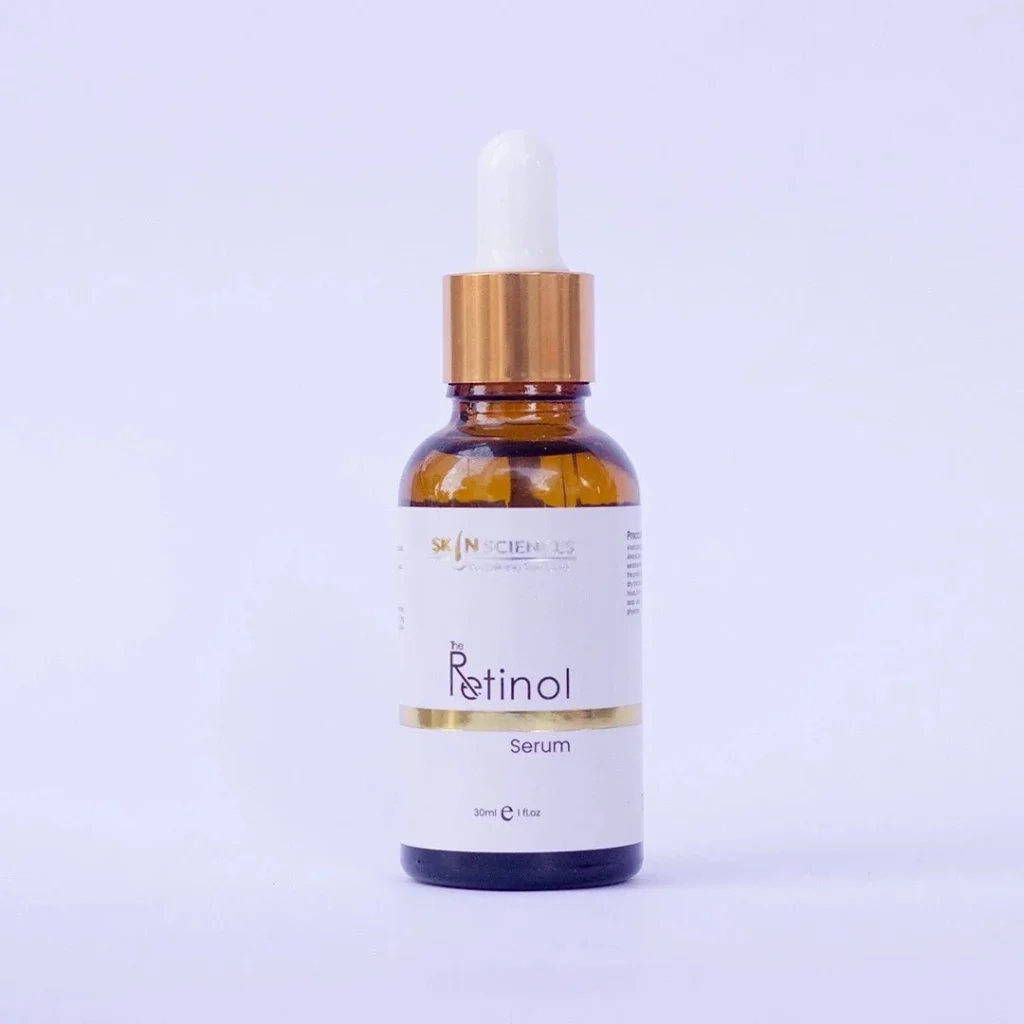
Skin Sciences Retinol: A Gradual Approach to Retinoid Skincare
For people looking to introduce retinol into a consistent skincare routine, Skin Sciences offers retinol-focused skincare designed for users at different stages of their routine.
Rather than expecting immediate transformation, use a retinol product consistently, introduce it gradually and support your routine with moisturizer and daily sunscreen.
The most useful question is not simply, “How strong is this retinol?”
It is also:
“Can my skin tolerate this product consistently enough to use it over the long term?”
Frequently Asked Questions
How long does retinol take to work?
Retinol generally requires several weeks before noticeable changes become apparent. Texture improvements may appear earlier, while more established improvements can take several months. Results vary according to formulation, concentration, skin condition and consistency.
How long should I use retinol?
Retinol is generally considered a long-term skincare ingredient rather than a short course. If your skin tolerates it and the product is appropriate for your needs, continued use may be necessary to maintain benefits.
How often should I use retinol as a beginner?
Start gradually, often once or twice weekly, and increase frequency only if your skin tolerates it. Some people eventually use retinol every other night or nightly, while others need a lower frequency.
How long does retinol purging last?
There is no universal duration. Temporary breakouts can occur in some users, but persistent or severe breakouts may indicate irritation or another skin problem rather than purging. A dermatologist can help distinguish between them.
Can I use retinol every night?
Some people eventually tolerate nightly use, but beginners do not necessarily need to start there. Increasing frequency too quickly can cause irritation and make it harder to maintain the routine.
What should I use with retinol?
Keep your routine simple: gentle cleanser, moisturizer and daily broad-spectrum sunscreen. Niacinamide may also fit into a retinol routine for many people, but introducing several new actives simultaneously can increase irritation.
Can I use retinol if I have sensitive skin?
Sensitive skin may require extra caution. Start with low frequency, use moisturizer and stop if you develop significant irritation. If you have a diagnosed inflammatory skin condition, consult a dermatologist before starting.
When should I start retinol?
There is no universal starting age. Consider your specific skin concern, sensitivity and skincare goals. If you are considering retinol for a medical skin condition, ask a dermatologist whether it is appropriate.
Final Takeaway: Don’t Judge Retinol Too Early
If you have been wondering how long to use retinol, think in terms of months rather than days.
The first few weeks are often about helping your skin adapt. Around 8–12 weeks, some users may begin noticing more meaningful changes, while longer-term improvements can continue developing over several months.
The fundamentals remain simple:
Start slowly.
Use an appropriate amount.
Moisturize.
Wear sunscreen every day.
Don’t confuse irritation with effectiveness.
Be consistent.